
What Is the Difference Between Bottom Entry and Top Entry Mills?
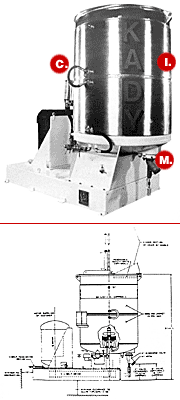
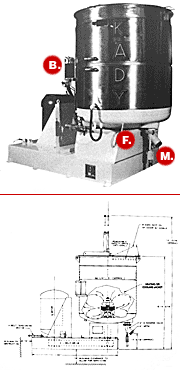
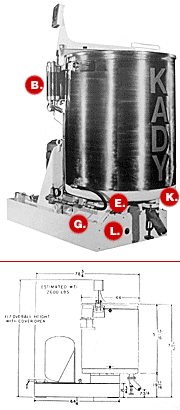
Bottom-entry mills introduce concentrated shear, impact and circulation from beneath the vessel, improving feed and retention for high-solids or continuous-processing applications. These mills are ideal for vacuum and pressure applications while top-entry mills have the flexibility of raising the dispersion unit in/out of the vessel for ease of cleaning. Top entry mills are also useful for servicing multiple clean and process tanks.
How Do I Choose the Right Model for My Batch Volume and Solids Loading?
Select a model whose recommended operating volume overlaps your typical batch size and whose energy input accommodate the shear level and batch flow required for your solids and viscosity; request an engineering review and lab trial to validate the selection.
Can Bottom Entry Mills Be Designed for Vacuum or Pressure Operation?
Yes, KADY designs mills and tanks to handle vacuum and pressurization when your process requires low pressure degassing or sealed, pressurized processing.
What Maintenance Intervals Should I Plan for Consumable Parts?
Maintenance intervals depend on media abrasiveness, operating hours, and RPM; KADY provides wear-part life estimates based on your formulation and can supply spares to minimize downtime.
If you are unsure of which model will best suit your application, our knowledgeable engineers are happy to work with you to make certain the Kady Mill is the appropriate machine for your process application. We will even test your materials in our lab which takes the guesswork out of mill specification. Whether you are emulsifying, homogenizing, milling, cooking, mixing, dispersing, or another application, KADY International has the knowledge and well over 60 years of experience in the industry; you can count on us to provide a tailor made solution for you.




 **Friendly Finance Options on Refurbished Mill Purchases**