
 As industrial processors prepare for 2027, the market for industrial mills—particularly high-speed rotor-stator dispersion mills and related high-shear mixing systems—continues on a path of steady, efficiency-driven expansion. Demand is shaped by the need for finer and more consistent particle size distributions, shorter processing cycles, lower energy consumption, and greater flexibility across batch and continuous operations. Manufacturers serving coatings, inks, chemicals, pharmaceuticals, food, adhesives, and advanced materials are prioritizing equipment that delivers measurable gains in throughput, quality, and operating cost.
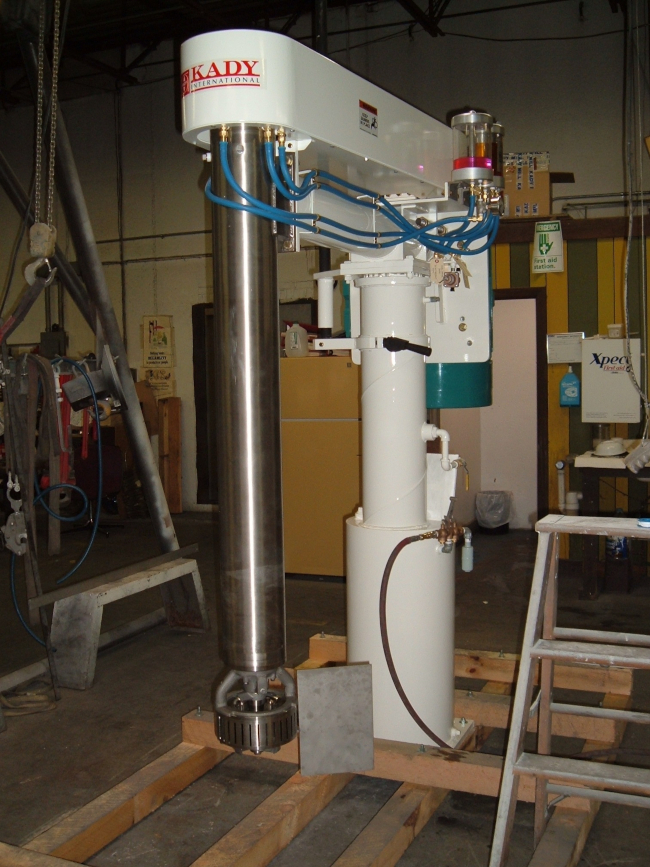
Kady International, a U.S.-based manufacturer of high-speed rotor-stator dispersion mills since 1949 and the only producer of bottom-entry industrial mills of this type, operates at the center of these trends. With mills installed in more than 40 countries and production facilities in Scarborough, Maine, the company has long focused on high tip speeds (up to 9,000 feet per minute), close rotor-stator clearances, and robust engineering that reduces processing time while improving dispersion quality.
Market Size and Growth Trajectory into 2027
Industry research covering industrial rotor mills, high-shear mixers, grinding mills, and broader mixing and dispersion equipment points to mid-single-digit to low-double-digit CAGRs through the late 2020s. Representative figures include industrial rotor mill markets growing at approximately 5–6% CAGR toward the early 2030s, high-shear mixer segments advancing in the 4.5–7.5% range, and wider industrial mixing equipment markets tracking similar trajectories. These projections imply continued positive year-over-year expansion into 2027, supported by both replacement of aging equipment and new capacity additions.
Growth is not uniform. Mature markets in North America and Europe emphasize modernization, automation, and energy performance, while Asia-Pacific remains the volume and growth leader in most mill-related segments, driven by chemical production, materials processing, and manufacturing expansion. Across geographies, buyers are increasingly evaluating total cost of ownership rather than capital cost alone—favoring designs that cut cycle times, improve yield, and lower specific energy use.
Key Trends Shaping the 2027 Industrial Mill Landscape
Energy Efficiency and Process Intensification
High tip-speed rotor-stator technology remains a core lever for process intensification. By combining impact, shear, and impingement in a single pass or short recirculation loop, these mills can achieve target particle sizes and stable dispersions in a fraction of the time required by lower-intensity systems. Operators report significant reductions in processing time—sometimes up to 90% in pigment and solids dispersion applications—which directly lowers energy consumption per unit of output and increases plant throughput.
Shift Toward Continuous and Inline Processing
Continuous-flow and inline configurations are gaining share as manufacturers move away from pure batch operations. These systems support higher production rates (throughput ranges of several to hundreds of gallons per minute are typical for industrial designs), tighter residence-time control, and easier integration with upstream and downstream equipment. Bottom-entry mills further enhance performance with dense, high-solids slurries by introducing shear and circulation from below the vessel, improving feed and reducing stratification.
Automation, Digital Controls, and Data
Variable-speed drives, process sensors, and basic digital monitoring are becoming standard expectations. These capabilities allow operators to match shear intensity to formulation needs, document process parameters for quality systems, and support predictive maintenance. While full AI-driven optimization is still emerging, the foundation of connected, adjustable equipment is already influencing 2027 procurement decisions.
Sustainability and Regulatory Alignment
Decarbonization pressures and tighter environmental rules are accelerating interest in lower-energy milling, reduced solvent use through better dispersion of water-based systems, and equipment that supports recycled or alternative feedstocks. Mills that deliver consistent results with less energy and fewer rework cycles align with both cost and sustainability objectives.
Regional Outlook
Asia-Pacific is expected to retain its leading position through 2027, supported by capacity expansions in chemicals, coatings, pharmaceuticals, and construction materials. Demand is broad-based, covering both new greenfield installations and upgrades of existing lines.
North America continues to prioritize resilience, customization, and performance. Domestic manufacturing of critical process equipment offers advantages in lead time, technical support, and the ability to engineer solutions for specific formulations—factors that remain important as companies near-shore or dual-source production.
Europe emphasizes energy performance, hygienic design (especially in food and pharma), and compliance. Upgrades of existing assets are common as operators seek measurable reductions in energy intensity.
Latin America, the Middle East, and Africa present selective opportunities tied to resource processing, infrastructure projects, and growing industrial bases.
Technology Focus: Rotor-Stator Dispersion Mills
High-speed rotor-stator mills remain differentiated by tip speed, clearance, horsepower, and configuration flexibility (top-entry, bottom-entry, batch, or continuous). Systems capable of achieving fine dispersions (including multi-Hegman grinds on many pigments) in one or few passes continue to displace multi-step processes. Jacketed vessels and variable-speed options provide additional temperature and intensity control for heat-sensitive or viscosity-sensitive formulations.
Applications span paints and coatings, inks, adhesives, chemical intermediates, pharmaceutical suspensions, food emulsions, mineral slurries, and specialty materials. The ability to disperse, emulsify, homogenize, de-aerate, or pre-mill in a single platform adds versatility that appeals to multi-product facilities.
Challenges and Considerations
Capital budgets remain disciplined in many sectors, so equipment must demonstrate clear payback through time savings, quality improvement, or energy reduction. Supply-chain considerations favor suppliers with strong parts availability and domestic or regional manufacturing. Skilled labor constraints also increase the value of equipment that is robust, relatively straightforward to maintain, and supported by responsive technical service. Finally, integrating new mills with existing plant infrastructure and control systems requires careful engineering—favoring manufacturers with proven custom-design capabilities.
Implications for 2027 and Beyond
The industrial mill market heading into 2027 rewards designs that combine high mechanical performance with operational flexibility and measurable efficiency gains. Companies that can offer both new and fully refurbished equipment (restored to factory specifications with warranty support), rapid customization, and on-site or laboratory testing will be well positioned. Bottom-entry capability, high tip-speed rotor-stator technology, and continuous-flow options address specific process challenges that lower-intensity or less flexible equipment cannot solve as effectively.
For processors evaluating capital projects or replacements in 2026–2027, the priority is clear: select mills that shorten cycles, improve consistency, reduce energy intensity, and integrate smoothly into existing or expanding production lines. U.S.-manufactured high-performance rotor-stator systems, backed by decades of application experience across more than 40 countries, continue to meet these requirements.
Kady International invites manufacturers to discuss specific process needs, review lab or production mill options (including available refurbished units), or arrange testing. Contact the Scarborough, Maine team at 207-883-4141 or
Frequently Asked Questions
What is the expected growth rate for the industrial mill and high-shear mixer market through 2027?
Multiple industry analyses project compound annual growth rates (CAGRs) in the 4.5% to 7.5% range for segments including industrial rotor mills, high-shear mixers, and rotor-stator dispersion equipment through the late 2020s and into the early 2030s, with continued positive momentum expected into 2027 driven by replacement cycles, efficiency demands, and expanding production in chemicals, coatings, pharmaceuticals, and food processing.
Which region is leading industrial mill demand heading into 2027?
Asia-Pacific consistently ranks as the largest or fastest-growing region across industrial mill, rotor mill, grinding equipment, and high-shear mixer markets due to manufacturing expansion, capacity additions in chemicals and materials, and infrastructure-related processing needs.
How is energy efficiency influencing industrial mill purchasing decisions for 2027?
Energy efficiency and lower operating costs are major drivers. Buyers prioritize mills with high tip speeds, optimized rotor-stator designs, variable speed controls, and systems that reduce processing time (often by up to 90% in high-shear applications) while improving particle size consistency and reducing energy per unit of output.
What role do bottom-entry and continuous-flow mills play in the 2027 outlook?
Bottom-entry configurations are especially valuable for high-solids slurries and dense materials, while continuous-flow systems support higher throughput and inline processing. These designs align with industry shifts toward continuous manufacturing, reduced batch times, and greater process flexibility.
Why does U.S.-manufactured equipment matter in the 2027 industrial mill market?
Domestic manufacturing supports shorter lead times, rapid customization, reliable parts availability, and closer technical collaboration—advantages that become more important as companies prioritize supply-chain resilience and process-specific engineering.
 **Friendly Finance Options on Refurbished Mill Purchases**